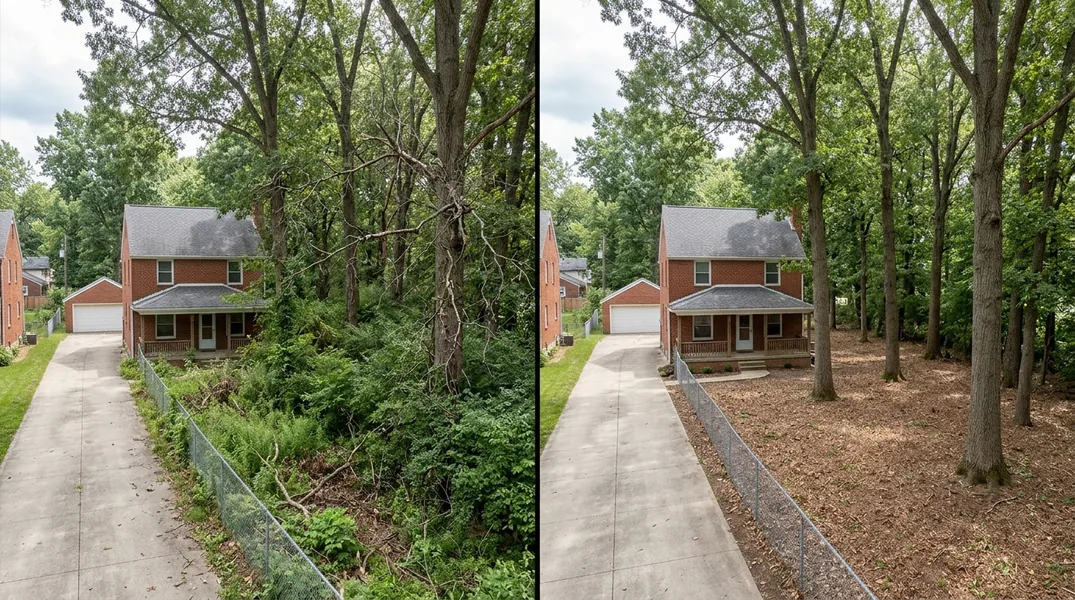
Understanding the Emerald Ash Borer Threat in Ohio
The emerald ash borer (EAB) has become one of the most destructive forest pests in North America, and Dayton homeowners are not immune to this invasive threat. This metallic green beetle, native to Asia, was first discovered in Michigan in 2002 and has since spread to nearly every state, devastating millions of ash trees. In Ohio, the emerald ash borer has been present for years, and its presence in the Miami Valley continues to grow each year.
What makes the emerald ash borer so dangerous is its lifecycle and feeding habits. Adult beetles lay eggs in the bark of ash trees, and when the larvae hatch, they tunnel beneath the bark, disrupting the tree's ability to transport water and nutrients. This damage typically kills an infested ash tree within three to five years of initial infestation. The problem is compounded by the fact that by the time homeowners notice symptoms, the tree is often already severely compromised, making treatment decisions urgent and consequential.
Signs Your Ash Tree Is Infested with Emerald Ash Borer
Early detection is critical when it comes to emerald ash borer management. One of the first signs of infestation is the appearance of small, D-shaped exit holes in the bark of your ash tree, typically about 1/8 inch in diameter. You may also notice vertical cracks or splits in the bark, which occur as the tree attempts to compartmentalize the damage caused by the larvae. Additionally, infested trees often experience canopy dieback, starting at the top of the tree and progressing downward as the pest destroys the vascular system.
Another telltale sign is increased woodpecker activity on your ash trees. Woodpeckers are attracted to emerald ash borer larvae and will peck at the bark to access them, creating distinctive rectangular scars on the trunk. If you notice any combination of these symptoms on your ash trees in Kettering or surrounding areas, it's important to have an experienced arborist evaluate the tree as soon as possible. The sooner you identify an infestation, the more treatment options remain available to you.
Emerald Ash Borer Treatment: Can Your Tree Be Saved?
If your ash tree shows early signs of emerald ash borer infestation, treatment may be a viable option to preserve the tree. The most effective treatment method is trunk injection, which involves injecting systemic insecticides directly into the tree's vascular system. These injections work by distributing the insecticide throughout the tree, poisoning the emerald ash borer larvae as they feed. Common injected products include emamectin benzoate and dinotefuran, both of which have shown good efficacy rates when applied correctly.
Tree injection treatments are most successful when applied to trees that are not yet heavily infested and still maintain good overall health. The treatment typically needs to be repeated every one to two years to maintain protection, as new beetles can infest the tree each season. For trees in the early stages of infestation with minimal canopy dieback, treatment can extend the tree's life and allow you to preserve a mature specimen on your property. However, treatment is not a permanent cure, and you should understand that ongoing management will be necessary.
Ash Tree Injection Cost in the Miami Valley: What to Budget
Understanding the financial commitment of emerald ash borer treatment is essential for homeowners making this decision. The pricing for ash tree injection treatments varies based on several factors, including the size of the tree, the specific insecticide used, and the number of injections required. Generally, homeowners can expect to pay anywhere from $200 to $600 per tree for a single treatment application, with larger trees commanding higher costs due to the increased amount of product and labor involved.
It's important to factor in that treatment is not a one-time expense. Most arborists recommend retreating ash trees every one to two years to maintain protection against new infestations. Over the course of five to ten years, the cumulative cost of repeated treatments can approach or exceed the cost of Tree Removal and replacement with a different species. When evaluating whether treatment makes financial sense, consider the age of the tree, its condition, and its value to your landscape. A younger, healthy tree with many years of life ahead may justify the ongoing treatment expense, while an older tree nearing the end of its natural lifespan may not.
When Tree Removal Is the Better Option
In many cases, Tree Removal is the most practical and cost-effective solution for emerald ash borer infested trees. If your ash tree is already heavily infested, showing significant canopy dieback, or has already lost more than half its branches, treatment is unlikely to be successful. Trees in advanced stages of infestation are simply too compromised for the insecticide to save them. Additionally, if you have multiple ash trees on your property that are all infested, the cumulative cost of treating each one may exceed the cost of removal and replacement.
Another consideration is the risk posed by a dead or dying ash tree. As an ash tree declines from emerald ash borer damage, its structural integrity weakens significantly. Dead branches become brittle and prone to dropping, creating a hazard for your home, family, and neighbors. In some cases, a heavily infested ash tree may need to be removed for safety reasons alone. Once you've decided that removal is necessary, Stump Grinding is often recommended to eliminate the stump and allow you to replant the area with a new, ash borer-resistant tree species.
Making Your Decision: Treatment vs. Removal in Dayton
Deciding whether to treat or remove an ash tree infested with emerald ash borer requires careful consideration of multiple factors. Start by having an experienced arborist assess the extent of the infestation and the overall health of the tree. An early-stage infestation on a young, healthy tree is a strong candidate for treatment, while a heavily infested older tree is typically better suited for removal. You should also consider the tree's location, its aesthetic value to your landscape, and your long-term property plans.
The financial picture matters too. Calculate the total cost of treatment over several years and compare it to the cost of removal and replacement with a disease-resistant species. Don't forget to factor in the value you place on maintaining a mature tree versus the benefits of removing a declining tree and starting fresh with a healthier specimen. Whatever you decide, the key is to act quickly. Emerald ash borer populations continue to grow in Ohio, and delaying your decision only limits your options. Contact Dayton Tree Service today for a free estimate on either treatment or removal services. Our experienced arborists can evaluate your ash trees and provide professional recommendations tailored to your specific situation. Call us at (937) 870-2309 to schedule your assessment.
Looking for a professional tree service contractor in Dayton? Dayton Tree Service responds fast for all your tree service needs.
Get a Free QuoteOur services: Tree Removal · Tree Trimming & Pruning · Stump Grinding